Reading the claim
The world's oldest tablao?
Tablao 1911 calls itself the world's oldest tablao. Here is what the venue's own history, the tourism board and Wikipedia say, and how to read the claim.
Book your hour of flamenco ↗Quick answer
Tablao Flamenco 1911 describes itself as the world's oldest tablao, counting from 1911, the year its corner opened as a tapas bar. Wikipedia says tablao venues spread through Spain during the 1960s as the older cafés cantantes gave way to them, so the claim describes a room that has staged flamenco for a long time, not necessarily one that was a tablao from its first day.
What the venue says
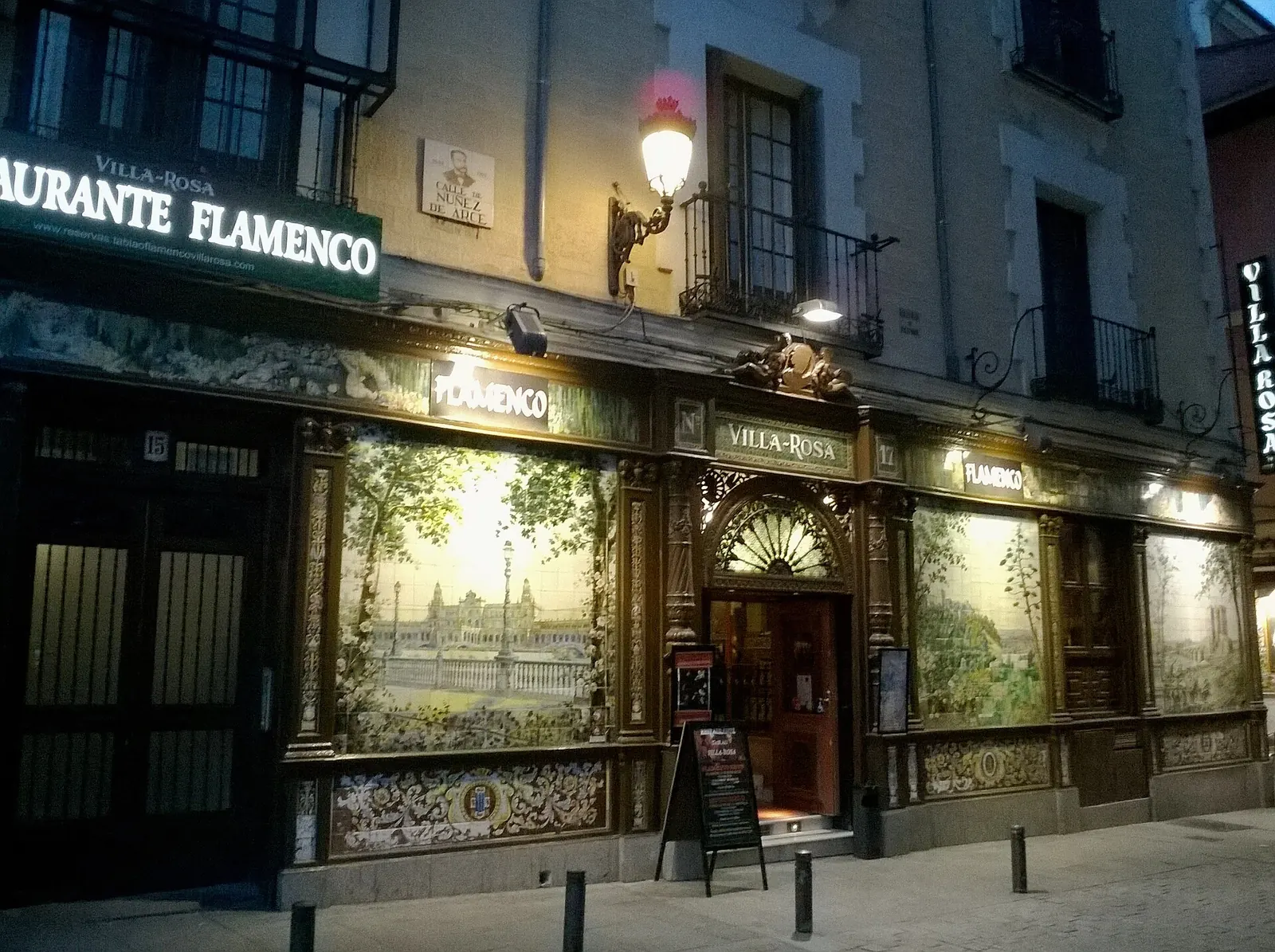
The tablao's own history page says it was founded in 1911 and calls the room the oldest flamenco tablao in the world, hence its name. The booking page repeats the claim in its title, and Madrid's tourism board calls it the world's oldest flamenco tablao, formerly known as Villa Rosa. The claim is the venue's own and the tourism board repeats it. This guide neither confirms nor disproves it. It lays out the dates so that you can see what the claim rests on. The venue's site also calls the room the cathedral of flamenco in Madrid and describes its history as a reflection of the history of flamenco in the city.
What the word tablao means
According to Wikipedia, tablao comes from the Spanish tablado, meaning floorboard, and names both a flamenco venue and the raised platform a dancer stands on. The same article says tablaos usually sell drinks and sometimes tapas or a complete meal. It adds that tablao venues developed in the 1960s throughout Spain, replacing the earlier cafés cantantes. That is a general statement about the type of venue, not a verdict on any one room.
The café cantante before it
Wikipedia dates the first café cantante to 1842, when the Café sin Nombre opened in Seville. These night cafés offered flamenco with drinks, helped the art spread and created the professional flamenco performer. They peaked from the middle of the 19th century into the 1910s, the page says, and afterwards the form declined. Villa Rosa opened in 1911, in the last stretch of that era, though as a fried-food and tapas bar rather than a café cantante.
The room's own timeline
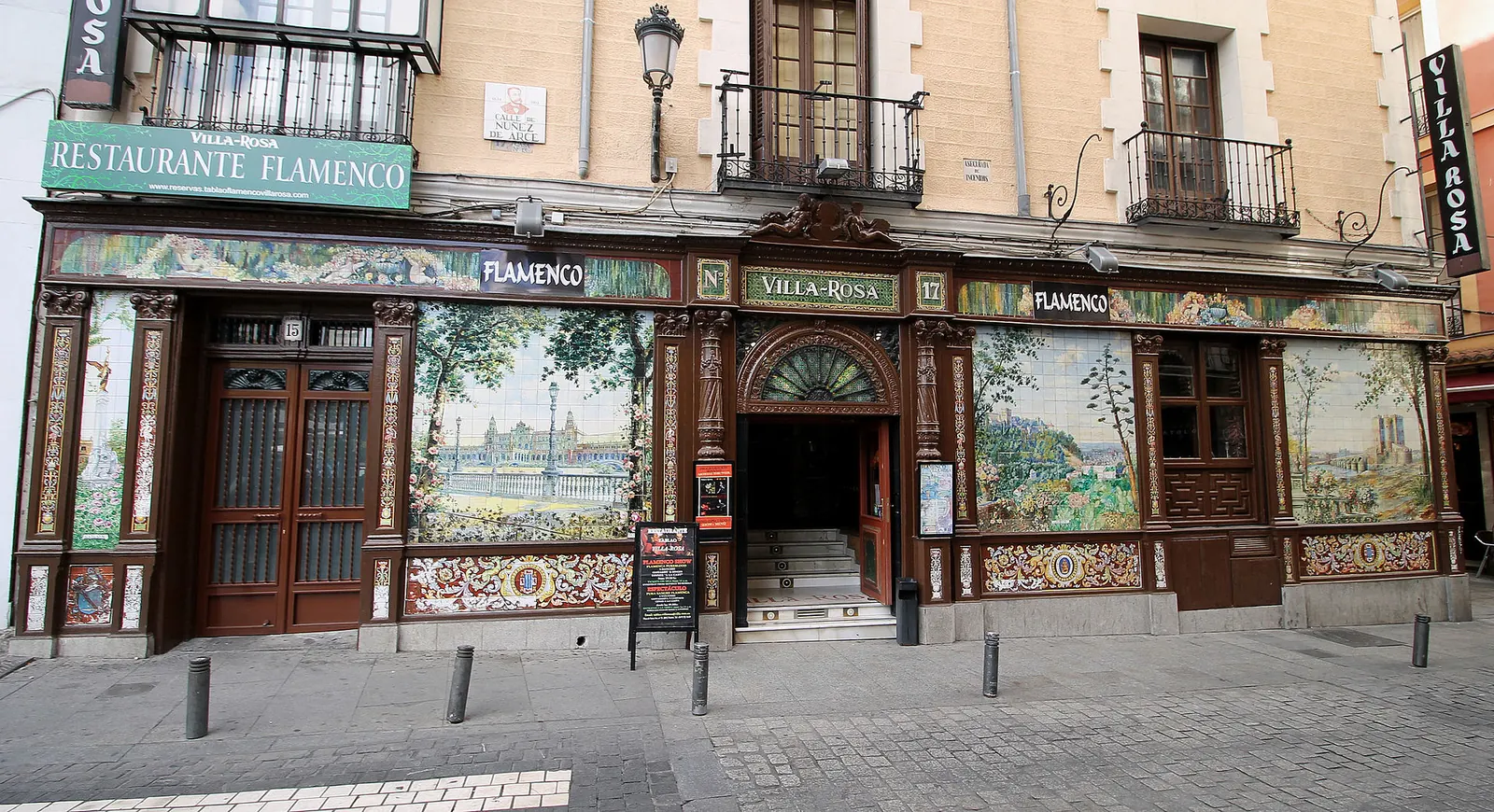
The venue says the corner opened in 1911 as the Gran Colmado and that in 1921 the owner signed the singer Antonio Chacón, after which the room became a flamenco meeting place. Spanish Wikipedia's article on Plaza de Santa Ana calls Villa Rosa a former tablao from the 1930s, and its article on the room says the tablao operated for more than thirty years before closing in 1963. So the sources place its flamenco identity somewhere between the 1920s and the 1930s.
How the claim can be true
A room can be the longest-running home of flamenco in a city without having carried the label tablao for the whole time. The venue counts from the year of its opening, and in its own account flamenco gatherings were part of the room's life from the 1920s. Read this way, oldest means longest-running flamenco room, and the venue's own history includes closures, a nightclub period in the 1980s and a new name in 2022. Whether you accept the claim or not, the dates in this guide come from the venue, the tourism board and Wikipedia, so you can check each one.
How the booking page words it
The ticket title carries the phrase World's Oldest in brackets, and its description calls the venue the oldest tablao in the world and the Cathedral of Flamenco. The venue's own pages use the same wording, and Madrid's tourism board describes the world's oldest flamenco tablao, formerly known as Villa Rosa, on Plaza de Santa Ana. Because the wording is shared, it is easy to mistake repetition for independent confirmation. The independent dates in this guide are the ones in the room's timeline and in Wikipedia's article on tablaos.
What it changes for your booking
Very little. The ticket buys an hour of flamenco with a welcome drink in a room fitted out in the late 1910s, according to the venue. The cast changes every week, so the quality of the evening depends on the artists on your date more than on the claim. If you care about history, read the guide to the façade and the guide to Chacón, which give the dates and sources for the room's story.
Read next: Villa Rosa and its tiled façade
Frequently asked questions
Who says it is the oldest tablao?
The venue, the booking page and Madrid's tourism board all call it the world's oldest. The venue counts from 1911.
What does Wikipedia say about when tablaos began?
That tablao venues developed in the 1960s throughout Spain, replacing the earlier cafés cantantes.
Does the claim change what I get?
No. The ticket is for an hour of flamenco and a welcome drink, whichever way you read the claim.
Sources