A first-timer's ear
Six flamenco forms to listen for
Six flamenco forms, or palos, you may hear in a Madrid tablao: soleá, seguiriya, tarantas, bulerías, farruca and tangos, with sourced notes on each.
Book your hour of flamenco ↗Quick answer
A flamenco programme is built from palos, the named musical forms, each with a mood and a rhythm of its own. The booking page for Tablao 1911 names soleás, bulerías and tarantas. This guide adds seguiriya, farruca and tangos, with a sourced note on each. The artists choose what to play, so treat the list as a listening aid, not a running order.
What a palo is
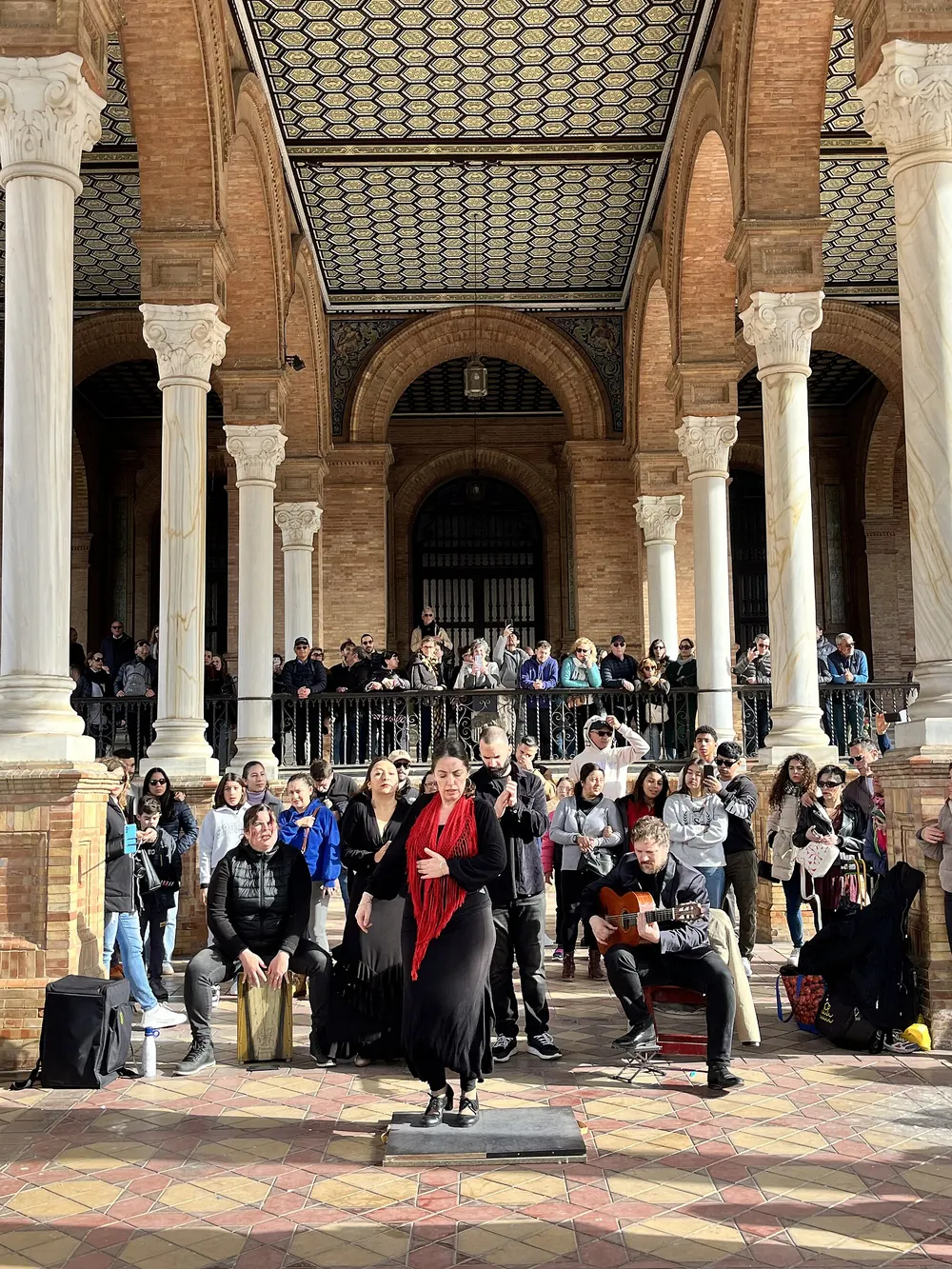
A palo, in Wikipedia's definition, is one of flamenco's traditional musical forms, classed by rhythm, mode, origin and similar features. UNESCO, which put flamenco on its Representative List in 2010, describes the art as a fusion of song, dance and guitar playing. The photograph shows a dancer and guitarist in Seville's Plaza de España, not at this tablao. At the tablao, the artists decide which palos to perform, and the venue says the cast rotates weekly. Wikipedia adds that the classification is popular and sometimes inconsistent, so even specialists group palos slightly differently.
Soleá, the weighty one
Soleá runs on a twelve-beat count. Wikipedia describes its lyrics as generally serious and solemn and says it probably began among the Calé Romani people of Cádiz or Seville. The earliest known mention is by the poet Gustavo Adolfo Bécquer in 1862. The ticket page for Tablao 1911 names soleás among the styles of the show. Listen for the singer stretching a line while the guitar keeps the cycle underneath. Wikipedia says singers must balance passion and restraint, and that irony appears often in the lyrics.
Seguiriya, the darkest
Seguiriya belongs to the cante jondo group, the deep song. Wikipedia describes it as among the most important styles in flamenco and quotes a source calling it the most tragic and intensely emotional expression in the art. It uses a twelve-count compás related to soleá: start a soleá count on its eighth beat and you get a seguiriya pattern. It is often sung with rubato. The dance for it was first introduced by Vicente Escudero in 1940, the page says.
Tarantas, songs from the mines
The booking page names tarantas among the styles. Wikipedia places the taranto in the mining region of Almería and groups it with the fandango and the taranta as songs of the mines. It says the taranto was first sung freely, with the guitar later adding rhythm, and that the dance became popular around the 1940s with Carmen Amaya called its mother. The same page warns that its sourcing is weak, so treat these details as provisional.
Bulerías, the one that closes the night
Wikipedia traces bulerías to the Calé Romani community of Jerez in the nineteenth century. It has a twelve-beat cycle, leaves the most room for improvisation and started as a quick, lively closing number after soleares. It often ends a flamenco gathering. The ticket page names bulerías among the styles of the show, so you have a fair chance of meeting it, though the artists decide the order. Wikipedia gives the usual tempo as roughly 195 to 240 beats per minute, a rate that explains why the form feels like a release.
Farruca, the austere dance
Farruca is in four beats. Wikipedia describes the music as austere, serious or sombre and says it has traditionally been danced by men, though women have danced it as well. The Sevillian dancer Faíco, with the guitarist Ramón Montoya, is traditionally credited with the modern version. Many performances accelerate towards a closing section of footwork. The page says the form's geographic origin is not certain, with Galicia the traditional link.
Tangos, the festive one
Tangos move in a four-beat cycle. Wikipedia's page on palos contrasts them and bulerías with the solemn deep forms as faster and festive, files tangos and tientos under duple metre, and sets their four-beat cycle apart from the twelve-beat cycle of soleá and its relatives. If a show moves from a slow, serious number to something that makes the room lift, you are probably hearing the change from one family to another. For the evening itself, the guide to the tablao's tickets explains what the booking covers.
Read next: Tablao 1911 tickets and seats
Frequently asked questions
What is a palo?
A traditional musical form of flamenco, with its own mood and counting pattern. Wikipedia groups palos by rhythm, mode, motifs and origin.
Which forms does the booking page name?
Soleás, bulerías and tarantas. The artists choose the programme, so it can include others.
Do I need to know the forms to enjoy a show?
No. The forms give you something to listen for, but the dance, the voice and the guitar carry the show without any preparation.
Sources